Korean War Service Record Research
Unit clues, service dates, locations, maps, Army history, photographs, and surviving family material shaped into a researched Korean War scrapbook.
Honor their service. Preserve their story.
A researched, handcrafted military service scrapbook and veteran scrapbook designed to help future generations understand the person behind the uniform, not just the dates on a record.
A real family story
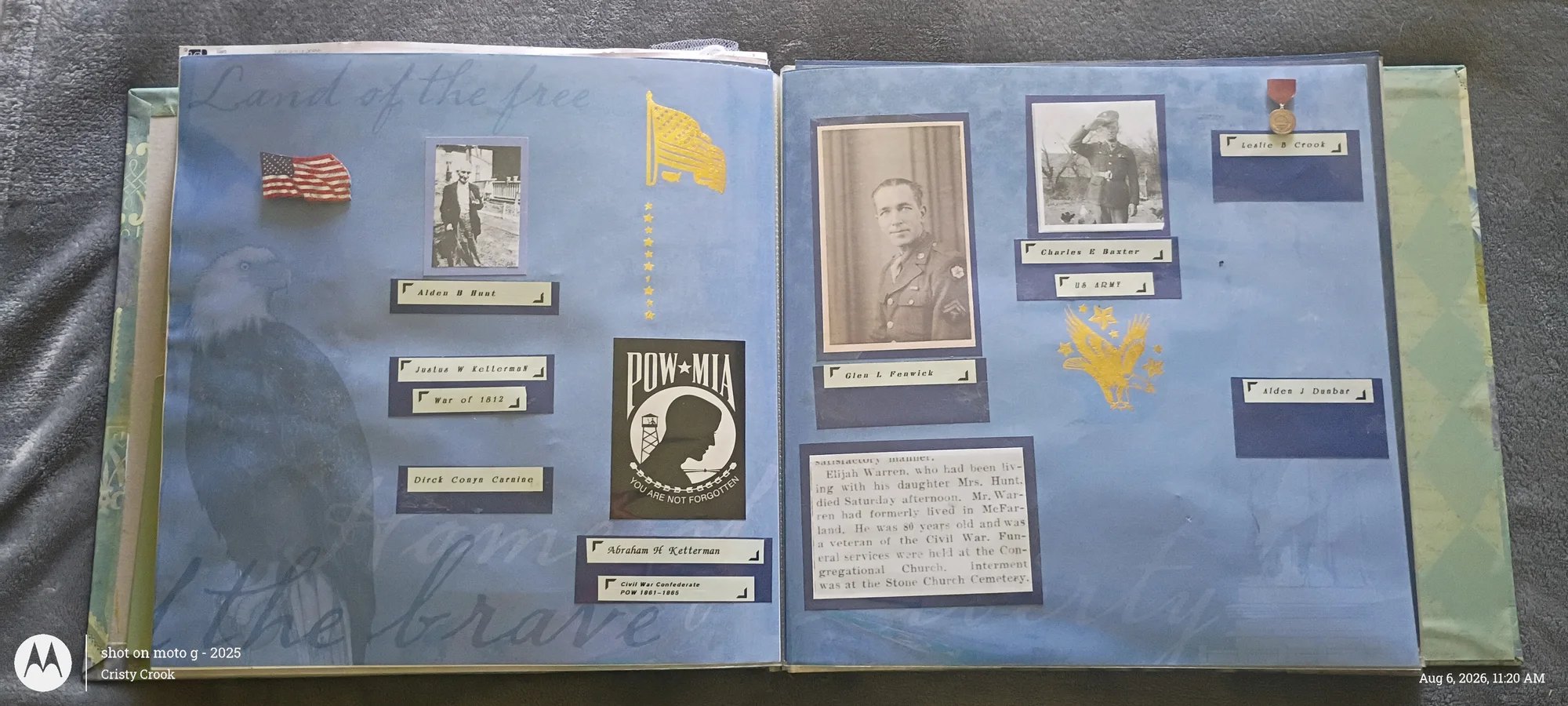
This featured project began with family photographs and a desire to preserve more than a name and a handful of military facts. Cristy built the scrapbook as a complete family-history experience, combining military context, unit information, period-style material, maps, photographs, and interactive paper elements.
The purpose was not to make the book feel like a textbook. It was to help the family understand the service story in a way that felt personal, visual, and worth returning to.
This featured military scrapbook was created for a member of Cristy’s own family and is shared here with her permission. It shows how military records, photographs, maps, documents, and family memories can be brought together into one complete story.
What goes into a timeline
Unit clues, service dates, locations, maps, Army history, photographs, and surviving family material shaped into a researched Korean War scrapbook.
A custom World War II scrapbook can connect a veteran’s photographs and papers with unit history, campaigns, locations, and the family’s own memories.
Earlier military research depends on the records that survive, but pension files, compiled service records, family documents, and historical context may help rebuild the story.
What a military service timeline can include
Every veteran’s record trail is different. When surviving records and reliable historical sources allow it, we can connect the clues a family already has with the wider military history around them.
See what to gather before starting military service research →
Browse all free family-history resources →
How we approach the research
For Korean War veterans and earlier conflicts, surviving records can be incomplete. We do not pretend otherwise. Whether a family calls it a veteran scrapbook, a WWII scrapbook, or a Korean War scrapbook, the goal is the same: responsibly piece together the strongest story the available evidence allows.
We begin with the person, known service details, photographs, documents, family stories, and anything already preserved at home.
We look for relevant military, unit, location, campaign, and historical information that can responsibly support the story.
Dates, places, events, photographs, and context are organized so the family can follow the journey without getting lost in raw records.
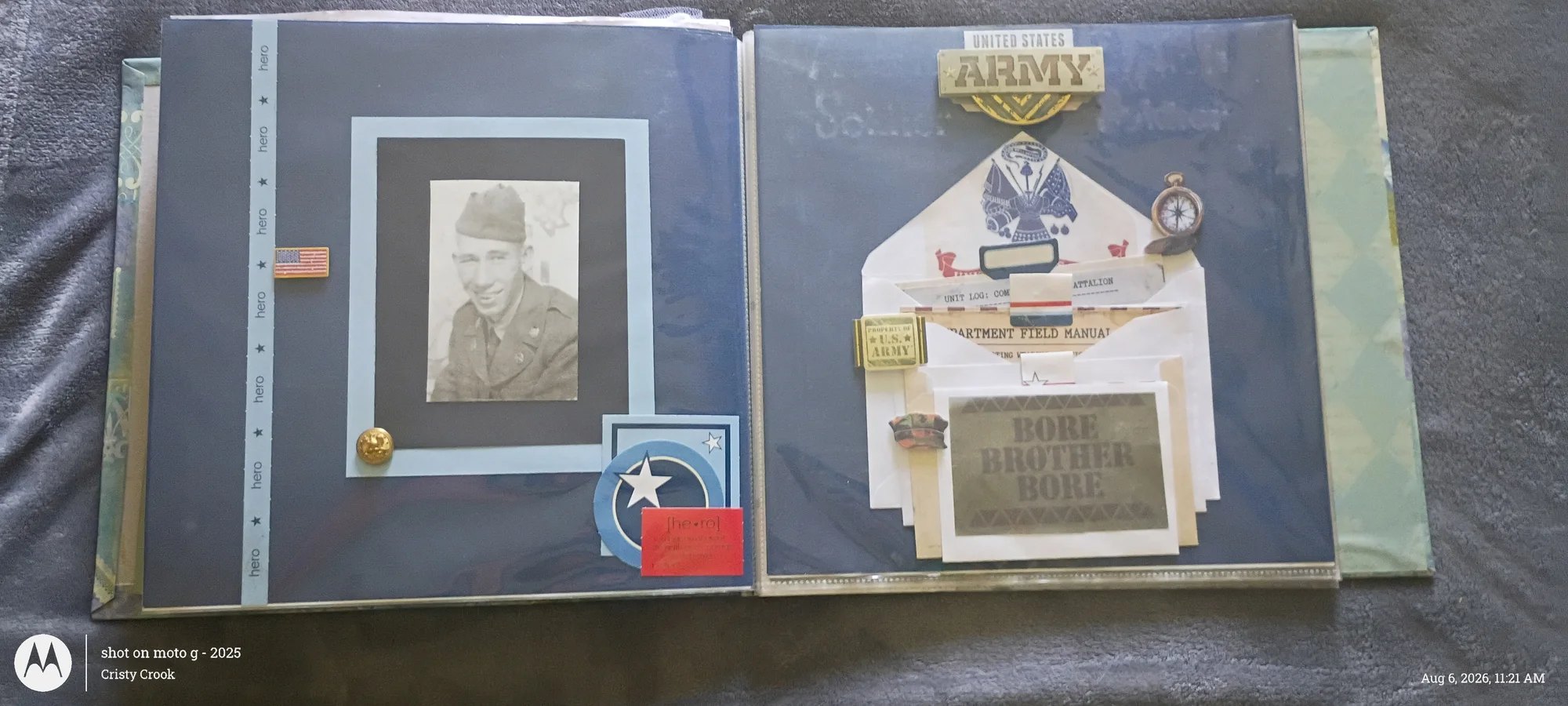
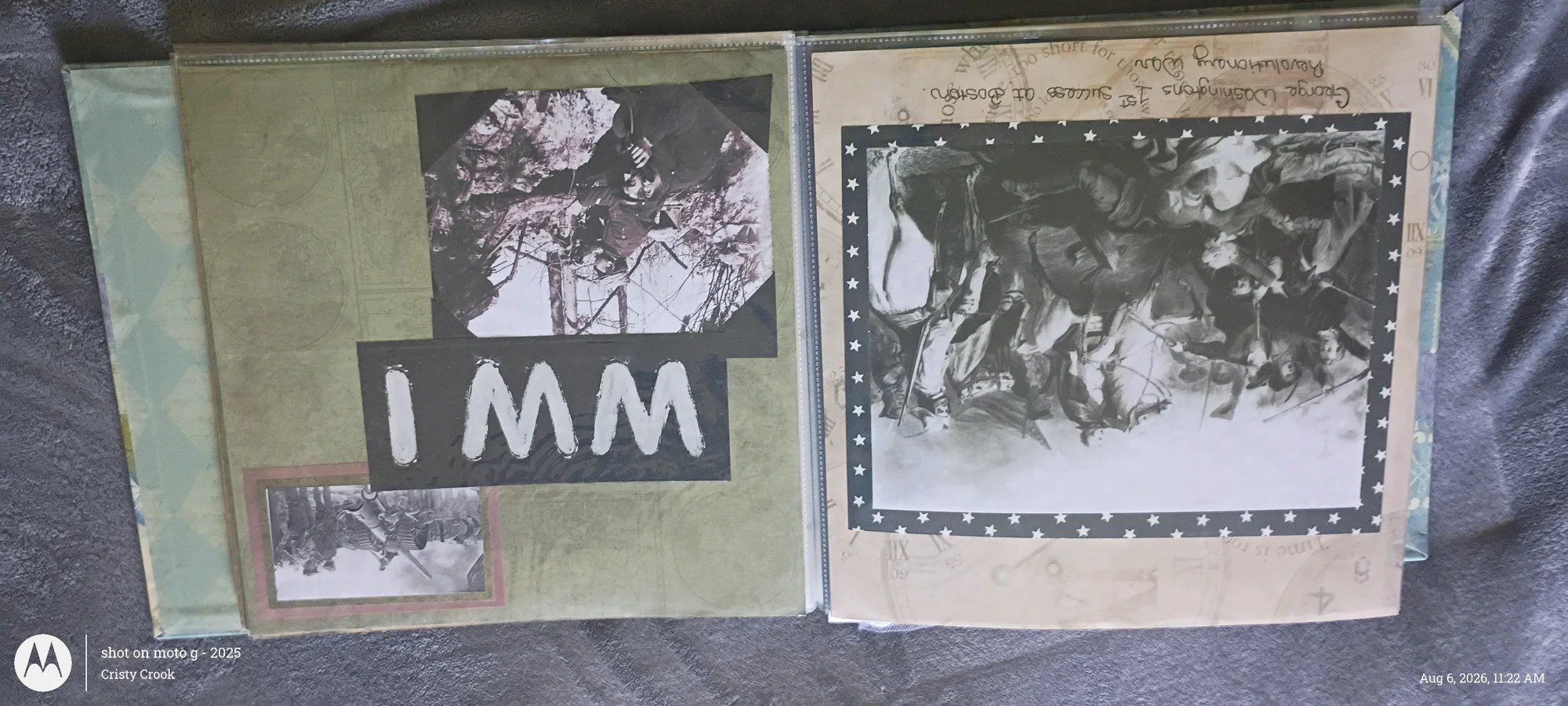
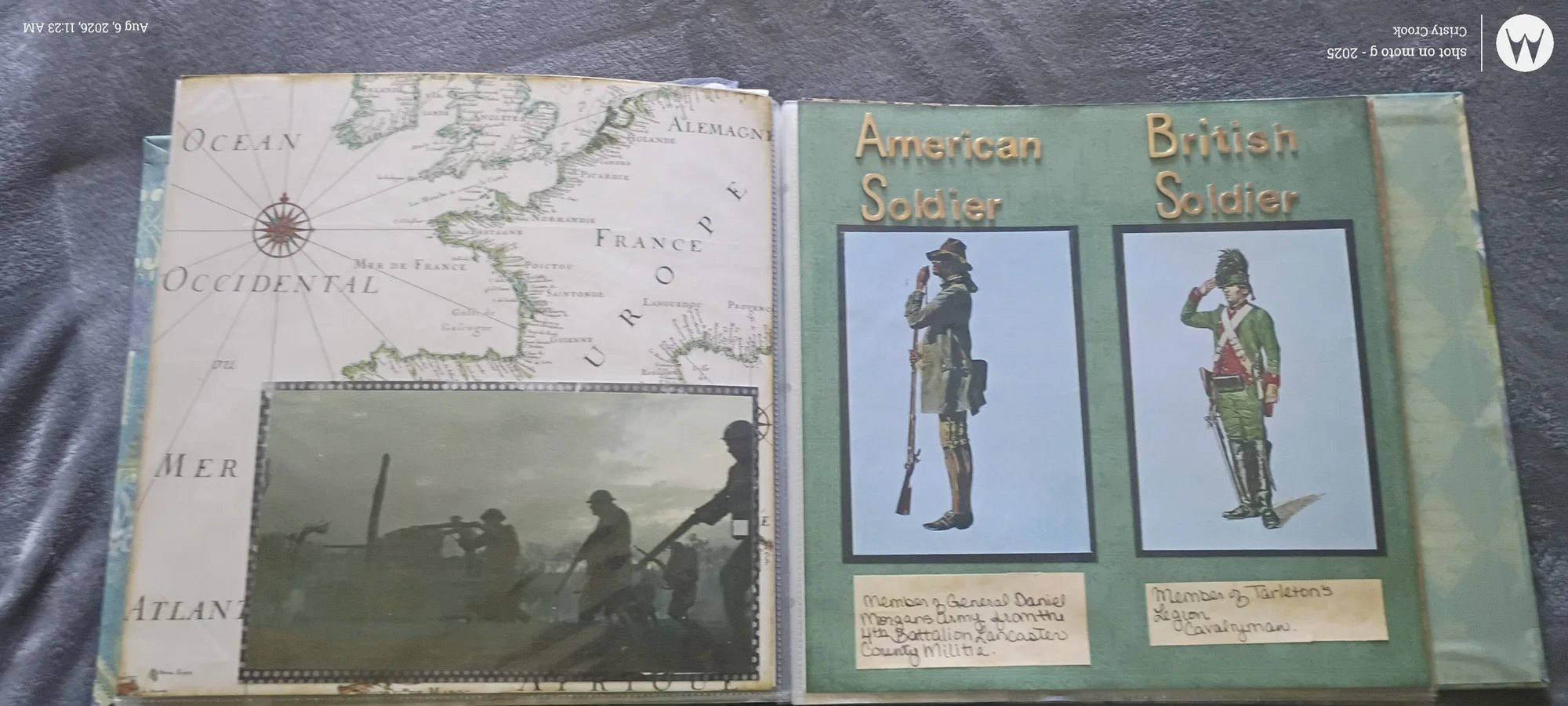
The research becomes pages, pockets, maps, envelopes, pull-outs, captions, and visual moments that invite the family to explore.
Inside the scrapbook
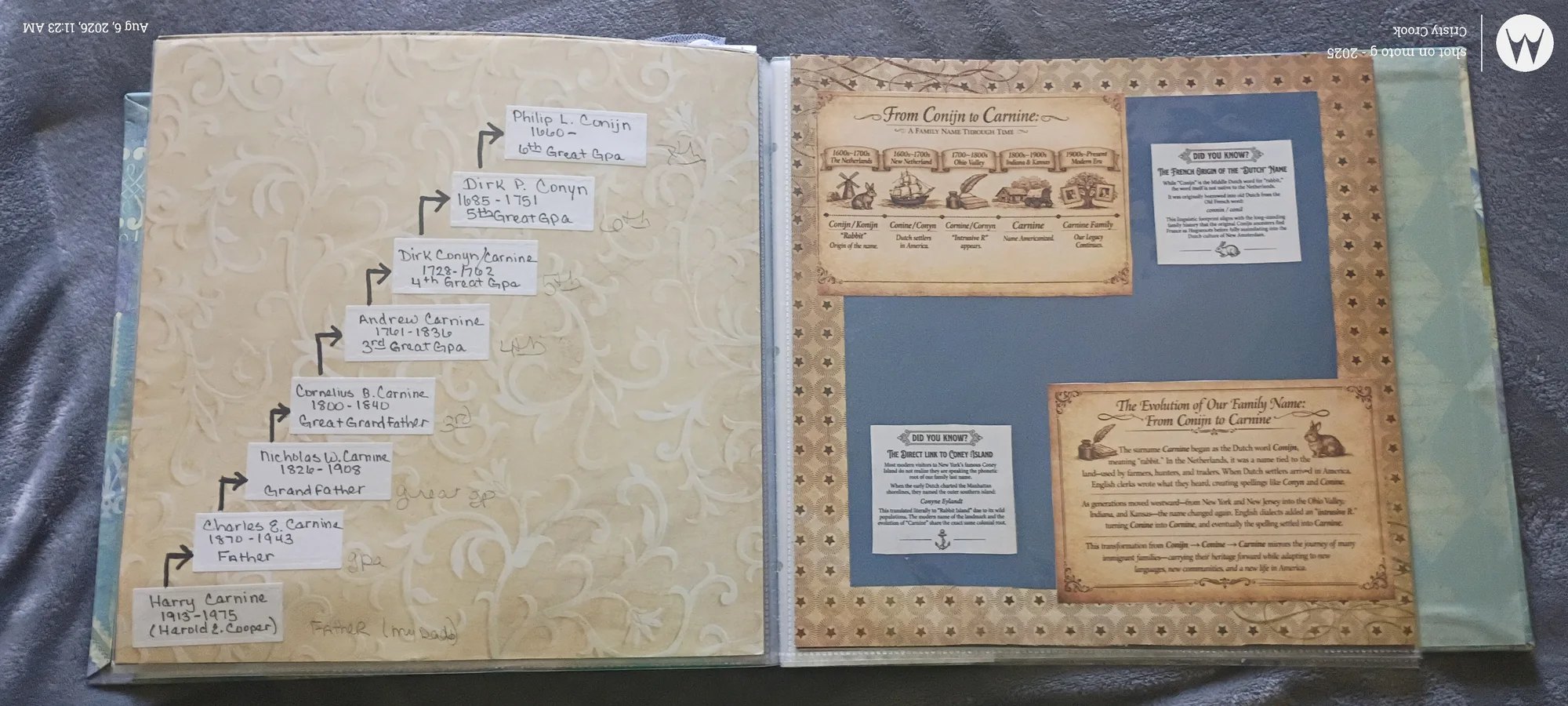
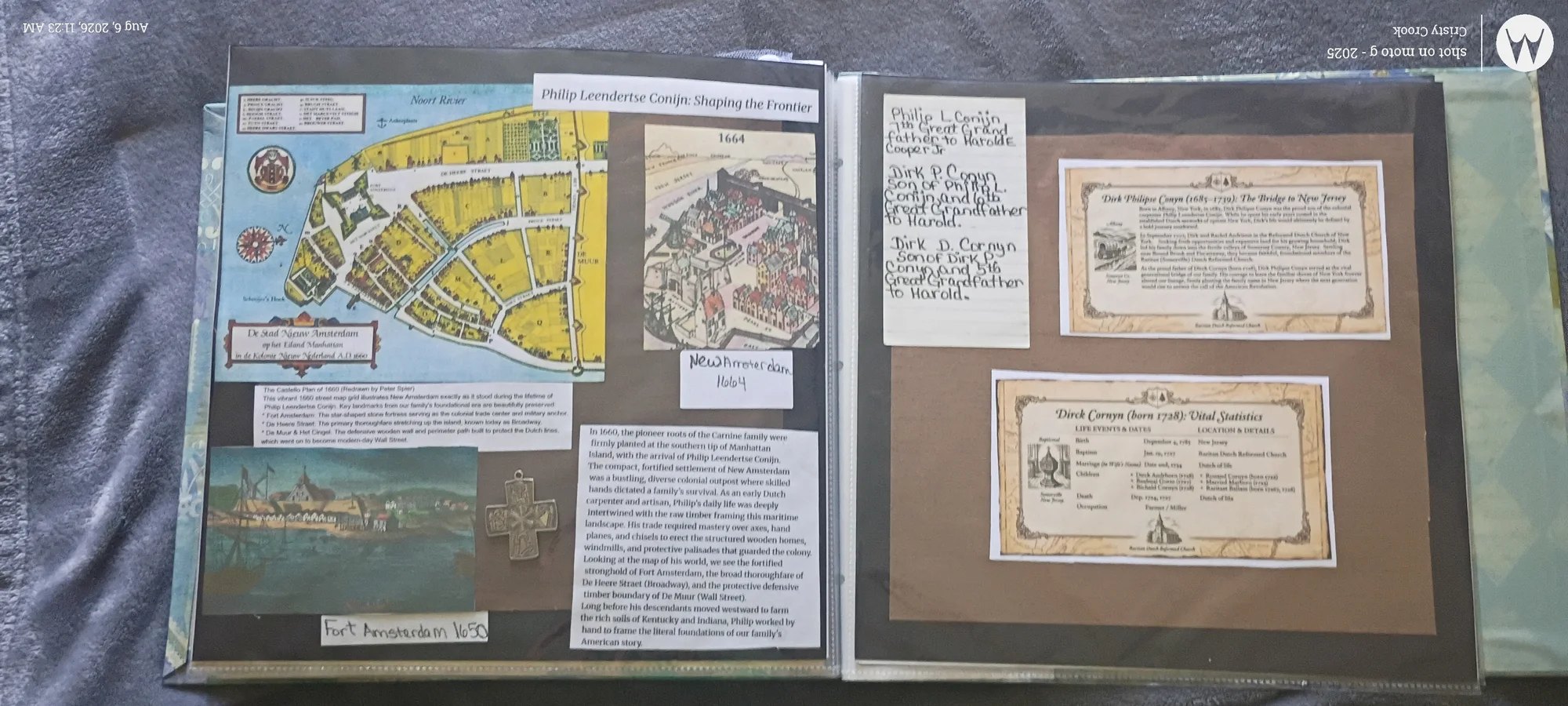
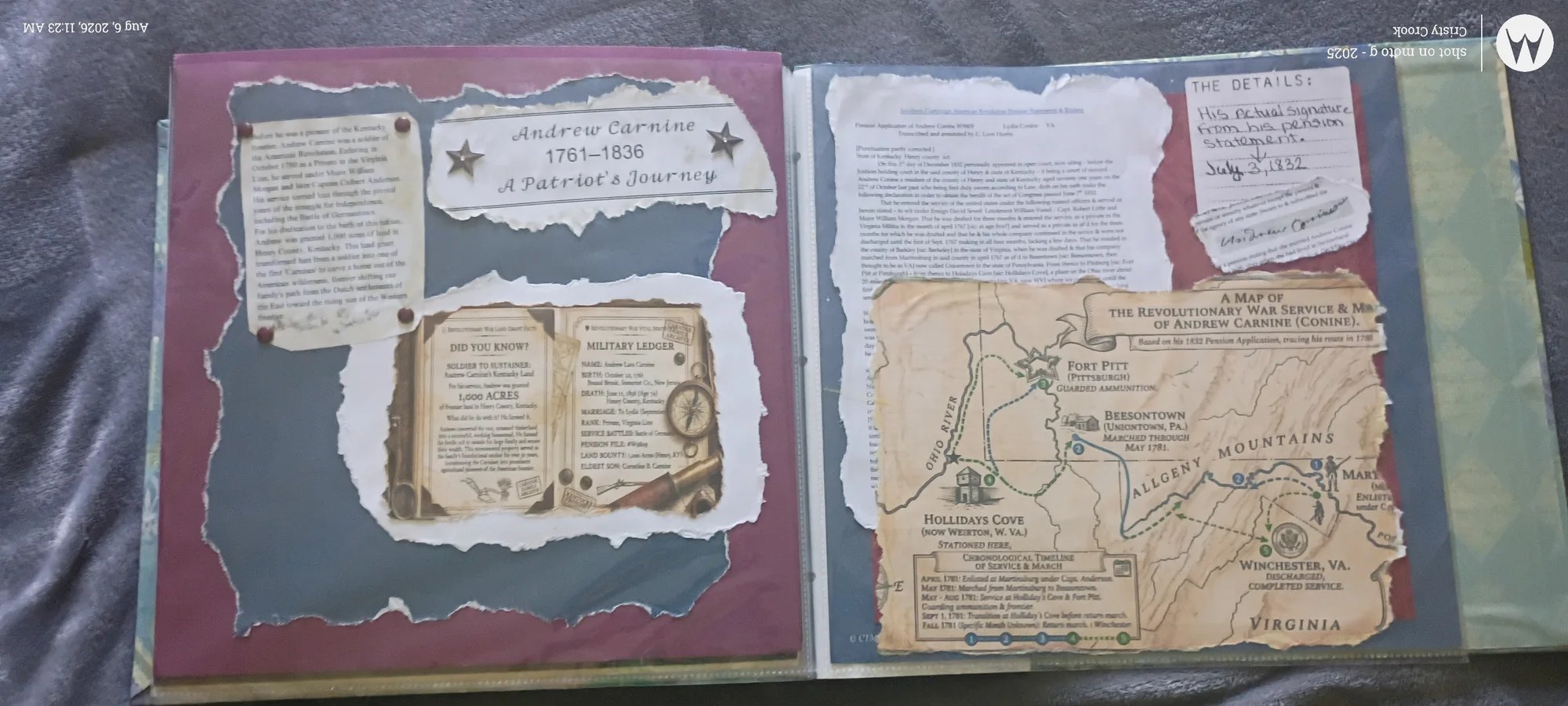
These are real photographs of military scrapbook pages handcrafted by Cristy.
Why the research matters
A photograph can preserve a face. A military record can preserve a date. But when those pieces are connected with unit history, locations, events, maps, and family memories, descendants can begin to understand a life in context.
That is why the military timeline can stand alone as a complete scrapbook. It is not simply a decorative album. It can become a family-history record, a memorial, and a way to keep a service story from fading into a box of unexplained papers.
A note about accuracy
Available details vary according to surviving records, the period of service, and the information a family provides. When something cannot be established, the scrapbook should say so rather than turn uncertainty into fact.
That honesty matters because the goal is not to create a prettier story. The goal is to preserve the strongest true story we can.
Questions families often have
It is a handcrafted scrapbook built around a veteran’s service journey. Instead of displaying photographs by themselves, the book can connect them with dates, units, places, maps, records, historical context, and family memories so descendants can follow the story.
Depending on what survives, research may help identify branch, rank, unit or company, assignments, training locations, campaigns, battles, awards, discharge details, and the historical setting around the veteran’s service.
That is common with older service histories. We use what can be responsibly supported and make uncertainty clear. We will not invent a location, battle, unit assignment, or event simply to make the timeline feel complete.
No. If an item is irreplaceable, you can keep it at home. Clear scans, photographs, measurements, and descriptions can often give us enough to research and design a place for the original without asking you to risk it in the mail.
Tell us about your veteran
You do not need everything organized. Begin with what you have: a photograph, discharge paper, letters, medals, names, dates, or family memories.
Start a Military Timeline