Photograph the group
Capture the box, album page, folder, envelope, or stack before separating the pieces. The original grouping may preserve context.
Protect the evidence before designing the keepsake
World War II letters, discharge papers, photographs, telegrams, newspaper clippings, and handwritten notes may be fragile, acidic, faded, or one of a kind. The first goal is simple: do no further harm.
Before moving anything
Capture the box, album page, folder, envelope, or stack before separating the pieces. The original grouping may preserve context.
Names, dates, studio marks, addresses, postmarks, handwriting, and filing notes can be as important as the image or document itself.
Assign a number to each item and use that number in filenames and notes. Avoid writing on the original when possible.
Write down who supplied the item, who appears in it, how they knew, and which details are uncertain.
Safer handling
Support brittle paper with a folder or stiff board rather than lifting it by one corner. Do not force a crease flat, peel away old tape, erase marks, or attempt a home repair on a valuable original.
Keep food, drinks, pens, and household cleaners away from the work area. If an item is moldy, wet, insect-damaged, or flaking, isolate it from the rest of the collection and seek qualified preservation advice.
Safer storage
Display copies when possible
Visible and ultraviolet light can fade or darken paper, ink, and photographs. A high-quality scan or color copy can be displayed while the original remains protected in storage.
If an original must be framed, use preservation-quality materials, keep the item from touching the glazing, and limit exposure to daylight and bright fluorescent light.
Digitize with context
Scan or photograph the entire front and back at a useful resolution without cropping handwriting or edges.
Use a stable identifier, person, approximate date, and side when known.
Preserve an unedited master file and make separate copies for sharing, printing, and the website.
Keep copies in more than one location and include the notes that explain the people, dates, and source.
Preserve the original and the story
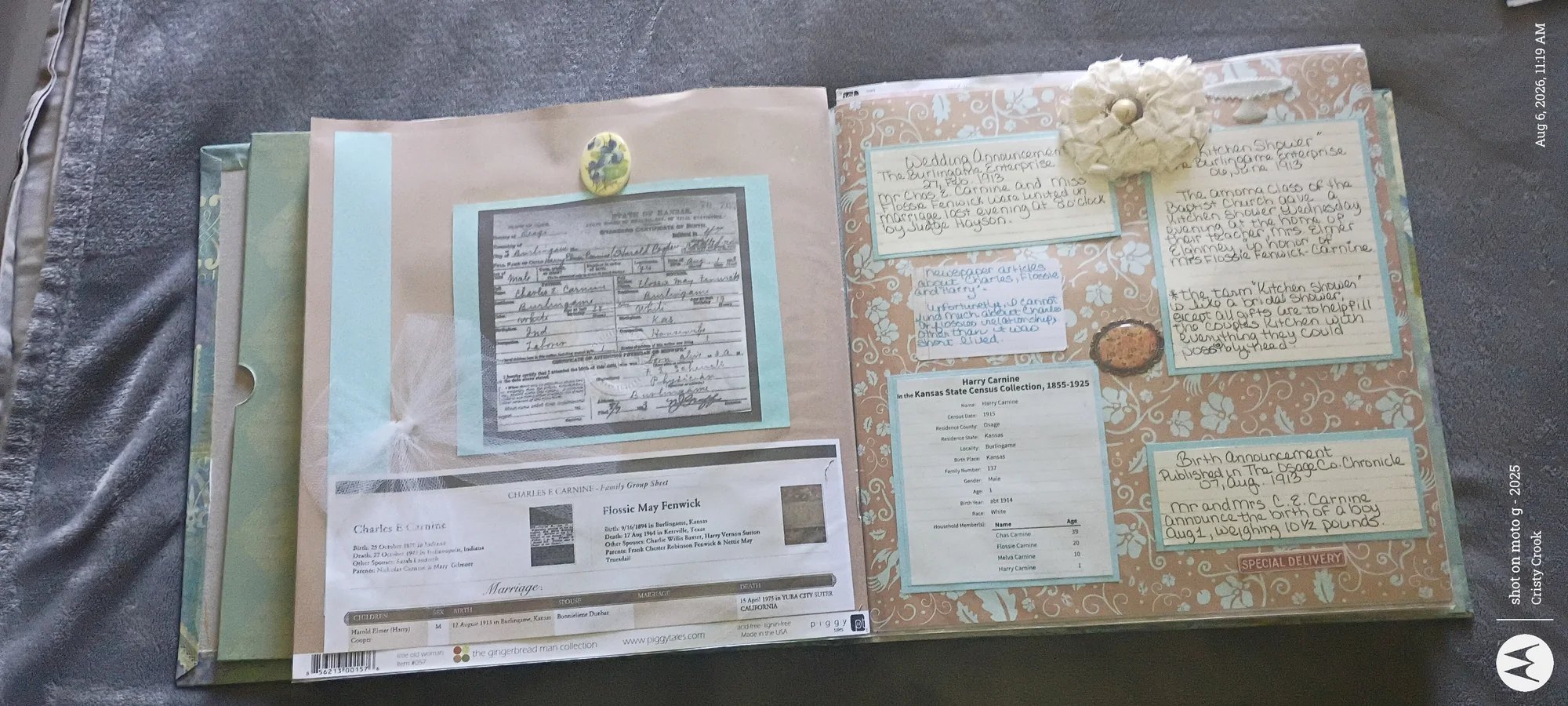
Use our family-history resource hub, or see how a custom family history scrapbook can be designed around high-quality copies while originals stay safely at home.
Start With What You Have